
255 읽음
김문수 비대위 전환과 장동혁 지도부 사퇴 제언
 최보식의언론
 0
0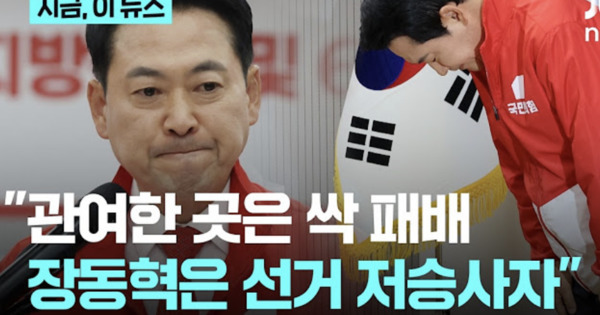
An even greater problem is that conservatives continue to be imprisoned by the politics of the past. Endless debates over pro-Yoon versus anti-Yoon factions, impeachment, and political blame games dominate the discourse. Yet the Korean people are no longer interested in loyalty contests. They are asking a simple question: who can lead the future? No political party can win public confidence by constantly reliving old wounds.
What the People Power Party needs today is not another internal power struggle. It needs a grand strategy for conservative reconstruction. The starting point should be a Kim Moon-soo Emergency Leadership Committee. However, a Kim Moon-soo committee must not become a vehicle for his own presidential ambitions. Kim's role should be that of a referee rather than a player. His mission is not to advance the interests of any particular faction or candidate but to create a fair and competitive arena in which future conservative leaders can emerge and compete on equal footing.
Kim Moon-soo has experienced virtually every major chapter of modern Korean politics. From labor activism and the democracy movement to serving as a lawmaker, Governor of Gyeonggi Province, and presidential candidate, he has witnessed both the triumphs and failures of Korean conservatism firsthand. In that sense, he represents not a faction but a living witness to Korea's modern political history.
Most importantly, Kim possesses significant moral capital. His love for Korea, commitment to liberal democracy, and genuine concern for ordinary citizens have defined his political career. These qualities make him better suited to serve as a referee than as a contender.
Kim Moon-soo is a referee.
But referees do not win games. Players do. ⁹The same principle applies to conservative reconstruction. The public is no longer interested in factional loyalty tests. They are looking for leaders who possess the vision, competence, and credibility necessary to govern the nation.
Among such leaders stands Oh Se-hoon. Oh is the mayor who successfully defended Seoul—the political and economic heart of South Korea—in a dramatic electoral victory. His success was not merely a municipal election victory but a powerful symbol that conservative revival remains possible. Among today's conservative leaders, he possesses perhaps the strongest combination of national competitiveness and appeal to metropolitan voters. He also represents the most realistic continuation of the political tradition that links Kim Young-sam's democratic reformism with Lee Myung-bak's pragmatic governance.
Han Dong-hoon is another significant political asset. Despite the setbacks suffered by conservatives, he remains one of the few younger leaders with nationwide name recognition and political appeal. Whether one supports him or not, he cannot be excluded from any serious discussion about the future of conservatism. His role in expanding the party's appeal and advancing generational change remains important.
Ahn Cheol-soo symbolizes another essential dimension of Korea's future: science, technology, and national competitiveness. In an era shaped by artificial intelligence, semiconductors, biotechnology, and digital transformation, conservatives would be unwise to ignore the expertise and symbolic value that Ahn brings to the table.
Na Kyung-won is one of the leading female political figures in the conservative camp. With her long legislative experience and strong public recognition, she is an important political asset who can help connect with female voters and moderate voters. As such, she remains a figure who cannot be overlooked in the process of broadening conservatism's appeal and expanding its political base.
Lee Jun-seok represents the aspirations and frustrations of younger generations. Opinions about him vary sharply, but few would deny his symbolic significance in the debate over generational change and youth participation in politics.
The future of conservatism does not belong to any single individual. It will emerge through competition and cooperation among leaders with different strengths—Oh Se-hoon's administrative experience, Han Dong-hoon's public appeal, Ahn Cheol-soo's technological vision, Na Kyung-won's political experience, and Lee Jun-seok's generational reach.
Despite recent setbacks, the latest local elections did not leave conservatives without hope.
Oh Se-hoon's dramatic victory in Seoul demonstrated that conservative revival remains possible. By overturning unfavorable exit polls and retaining control of the nation's capital, he achieved far more than a local electoral victory. He preserved a strategic stronghold at a time when power was rapidly concentrating elsewhere. The election also demonstrated that the political philosophy associated with former President Lee Myung-bak—growth, development, and pragmatic governance—still resonates with many citizens. Seoul voters once again showed that competence and practical results remain politically valuable.
In the Yeongnam region, conservatives also confirmed that their traditional support base remains intact. Former President Park Geun-hye played an important role as a symbolic figure during one of the most difficult periods in conservative history. Her renewed public appearances helped stabilize and energize conservative voters.
In many respects, the political legacies of Lee Myung-bak and Park Geun-hye helped preserve the remaining foundations of Korean conservatism in Seoul and Yeongnam. The challenge now is to transform that foundation into a broader movement of renewal.
This requires historic reconciliation. Yet the central task is not simply reconciliation between pro-Lee and pro-Park factions. It is the reunification of two legitimate historical traditions within Korean conservatism. One tradition flows from Park Chung-hee and Park Geun-hye and represents industrialization and national development. The other flows from Kim Young-sam, Lee Myung-bak, and Oh Se-hoon and represents democratization, reform, and pragmatic governance. Kim Young-sam symbolized democratic transition while remaining firmly committed to liberal democracy and the market economy. Lee Myung-bak transformed that tradition into a politics of growth and practical achievement. Oh Se-hoon continues that legacy through a philosophy that values solutions over slogans and results over ideological confrontation.
The historic three-party merger of 1990 included Kim Jong-pil as a crucial pillar. Today, however, no political figure in the Chungcheong region possesses comparable national influence. Rather than waiting for such a leader to emerge, conservatives should focus on winning the trust of Chungcheong voters directly. When the industrialization forces of Daegu and North Gyeongsang, the democratic and reformist forces of Busan and South Gyeongsang, and the pragmatic forces of the Seoul metropolitan region come together, Chungcheong will naturally follow.
That would constitute the conservative equivalent of a new Three-Party Merger for the twenty-first century. To achieve that goal, conservatives must first break with the past. Yoon Suk Yeol was an extraordinary political phenomenon. He became president without a traditional regional base, without a fully developed political philosophy, and without the long political apprenticeship that most national leaders undergo. An unprepared presidency inevitably produced an unprepared administration.
Most damaging of all was the declaration of martial law. It represented one of the most self-destructive political decisions in modern conservative history. At that moment, the administration undermined its own legitimacy and accelerated its political decline. Whatever history's final verdict may be, the political judgment of the public has already been delivered.
Equally troubling has been the response of some pro-Yoon politicians. Rather than engaging in serious self-reflection after two impeachments and repeated electoral defeats, many have focused on protecting factional interests and assigning blame elsewhere.
The greatest failure of pro-Yoon politics was placing loyalty to an individual above the core values of conservatism itself. Liberal democracy, market economics, rule of law, and political accountability were overshadowed by factional calculations. The result was impeachment, electoral defeat, and the loss of political influence.
The Korean people are demanding a new conservatism—not a repetition of the failures of the Yoon era. For that reason, the current party leadership must accept political responsibility. Politics is ultimately judged by results.
Above all, the current leadership, whose political foundation is closely tied to the pro-Yoon faction, must accept clear political responsibility for the election results. Politics is ultimately judged by outcomes. In particular, the Jang Dong-hyuk leadership failed to produce meaningful electoral success even in the Chungcheong region, its own political stronghold. The fact that the party lost all four metropolitan-level local government positions in Chungcheong carries political significance far beyond a simple electoral defeat.
Chungcheong has long been regarded as one of the most important swing regions in South Korean politics. A near-total defeat there is a warning sign that the People Power Party has failed to earn the trust of moderate and independent voters. Moreover, Chungcheong was precisely the region where the Jang Dong-hyuk leadership was expected to demonstrate its greatest political strength and competitiveness. The outcome, however, proved to be exactly the opposite.
Jang Dong-hyeok's resignation should therefore be viewed not as political retaliation but as political accountability. Only after such accountability is demonstrated can a Kim Moon-soo Emergency Committee acquire the legitimacy necessary to lead a genuine conservative renewal.
If established, the committee must serve as more than a temporary crisis-management body. It should become the strategic headquarters for rebuilding Korean conservatism. Its primary task should be to establish a permanent consultative framework through which all major conservative figures can compete fairly, cooperate constructively, and prepare for the future together.
Conservatives stand at a historic turning point. The Korean people have already delivered repeated warnings through impeachment and electoral defeat. Failure to understand those warnings will leave no future for conservatism.
Political parties that exclude people decline. Political parties that unite people grow. The starting point of conservative reconstruction must be unity rather than division, and the future rather than the past.
What the People Power Party needs today is not another factional war. It needs the responsible resignation of the Jang Dong-hyeok leadership, the formation of a Kim Moon-soo Emergency Committee, and a grand coalition that brings together every valuable asset within the conservative movement.
The Three-Party Merger of 1990 was a historic decision designed to secure political renewal and national leadership. Today's conservatives require a decision of similar magnitude. Industrializers and democratizers, Yeongnam and the Seoul metropolitan region, senior statesmen and younger leaders, traditional conservatives and future-oriented reformers must come together.
Conservatives no longer have the luxury of explaining away past failures. The task before them is not disintegration but reconstruction; not division but unity; not the past but the future.
The Jang Dong-hyeok leadership should step down, and a Kim Moon-soo Emergency Committee should be formed. That is the path to conservative renewal—and the path toward a stronger future for the Republic of Korea.
jeongkeekim@naver.com
#WhyKimMoonSoo
#ConservativeRenewal
#KoreanPolitics