
350 읽음
미래 스마트시티의 해법…왜 ‘기술보다 사람, 혁신보다 삶의 질’인가?
 최보식의언론
 0
0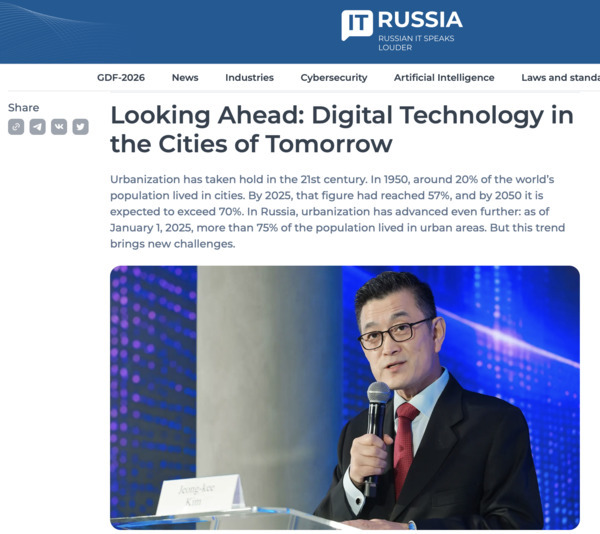
111개국에서 1,300여 명이 참석한 이번 행사에서 김 총장은 “기술은 수단이고, 사람은 목적”이라며 “인공지능과 디지털 혁신이 시민의 삶의 질 향상으로 이어져야 한다”고 강조했다.
또한 디지털 격차 해소와 도시 간 국제협력의 중요성을 역설했다.
아래는 이 기조강연을 소개한 러시아 IT 전문매체 ‘IT Russia’의 ‘Looking Ahead: Digital Technology in the Cities of Tomorrow’(미래를 내다보다: 내일의 도시를 바꾸는 디지털 기술)라는 제목의 기사 전문이다. (편집자)
21세기 들어 도시화가 본격적으로 진행되고 있다. 1950년에는 세계 인구의 약 20%가 도시에 거주했지만, 2025년에는 그 비율이 57%에 달했고 2050년에는 70%를 넘어설 것으로 예상된다. 러시아의 도시화는 더욱 빠르게 진행됐다. 2025년 1월 1일 기준 러시아 인구의 75% 이상이 도시 지역에 거주하고 있다. 그러나 이러한 추세는 새로운 과제를 가져오고 있다.
대도시의 삶은 갈수록 어려워지고 있다. 교통 혼잡이 심화되고, 도시 기반시설과 공공서비스에 대한 부담이 커지며, 환경 문제도 악화하고 있다.
세계스마트시티기구(WeGO)의 김정기 사무총장은 모스크바에서 열린 제2회 글로벌 디지털 포럼에서 '디지털 전환에서 인간 중심 도시로: 혁신과 사람, 글로벌 도시의 미래를 연결하다'라는 제목의 미래 비전 강연을 통해 모든 사람이 편안하게 살아갈 수 있는 대도시를 어떻게 건설할 것인지에 대해 설명했다.
김 사무총장에 따르면 21세기 들어 기술 변화의 속도는 더욱 빨라지고 있다. 얼마 전까지만 해도 연구 프로젝트이거나 공상과학 영화에서나 볼 수 있을 것 같았던 기술들이 이제 수억 명의 일상생활 속으로 들어왔다.
도시들은 빠른 속도로 디지털 전환을 추진하고 있다. 우리는 도시 발전의 새로운 시대를 눈앞에 두고 있으며, 디지털화는 혁신적이고 지속 가능한 도시를 건설하는 토대가 될 것이다.
김 사무총장은 다음과 같이 강조했다.
"그러나 기술이 더욱 강력해지고 도시 환경에 점점 더 깊숙이 통합될수록, 우리는 스스로에게 보다 근본적인 질문을 던져야 한다고 생각합니다. 우리는 애초에 왜 변화하고 전환하려는 것일까요?"
그의 견해에 따르면 핵심 과제는 단순히 도시에 최신 디지털 기술과 이를 뒷받침하는 기반시설을 구축하거나, 인공지능을 포함한 데이터 전송ᄋ분석 플랫폼을 도입하는 데 있지 않다.
김 사무총장은 "기술은 도시가 직면한 문제와 과제를 해결하는 데 도움을 줍니다. 그러나 디지털 전환의 성공 여부를 도시가 얼마나 많은 기술을 도입했는지만으로 평가해서는 안 됩니다"라고 말했다.
미래 도시에서 디지털 전환의 가치는 기술이 무엇을 할 수 있는가에 의해서만 결정되지 않는다. 더욱 중요한 것은 이러한 기술을 어떻게 활용하며, 실제로 시민들의 삶의 질을 향상시키는가 하는 점이다.
김 사무총장은 다음과 같이 결론지었다.
"세계스마트시티기구(WeGO)는 도시가 단순히 디지털 전환이 일어나는 장소가 아니라고 믿습니다. 도시는 디지털 전환이 진정한 의미를 찾는 곳입니다. 또한 우리는 도시들이 서로 협력할 때 더 많은 것을 이룰 수 있다고 믿습니다."
바로 이러한 이유로 스마트시티 정책은 기술 자체를 넘어서는 방향으로 나아가야 한다. 궁극적으로 혁신의 성공 여부는 그것이 도시 주민들에게 얼마나 실질적인 혜택을 제공하는가에 따라 평가될 것이다.
「기사 원문」
Urbanization has taken hold in the 21st century. In 1950, around 20% of the world's population lived in cities. By 2025, that figure had reached 57%, and by 2050 it is expected to exceed 70%. In Russia, urbanization has advanced even further: as of January 1, 2025, more than 75% of the population lived in urban areas. But this trend brings new challenges.
Life in large cities is becoming increasingly difficult, with traffic congestion, mounting pressure on public utilities and environmental problems.
Jeong-kee Kim, Secretary General of the World Smart Sustainable Cities Organization (WeGO), addressed how to build a metropolis that is comfortable for everyone in a visionary lecture titled "From Digital Transformation to Human-Centered Cities: Connecting Innovation, People, and Global Urban Futures" at the Second Global Digital Forum in Moscow.
According to the WeGO chief, technological change is accelerating in the 21st century. What until recently seemed like a research project or something out of science fiction has become part of everyday life for hundreds of millions of people. Cities are undergoing digital transformation at a rapid pace. We stand on the threshold of a new era of urban development, and digitalization will be the foundation for building innovative, sustainable cities.
"However, as technologies become more powerful and increasingly integrated into our urban environments, I believe we need to ask ourselves a more fundamental question: Why are we changing and transforming in the first place?" Jeong-kee Kim stressed.
In the expert's view, the main task is not simply to equip cities with the latest digital technologies, the infrastructure that supports them, and platforms for transmitting and analyzing data, including through artificial intelligence.
"Technology helps cities address the problems and challenges they face. But the success of digital transformation should not be measured solely by how many technologies a city has implemented," the urban expert said.
The value of digital transformation in the cities of tomorrow will depend on more than what technology can do. What matters most is how these technologies are used and whether they improve people's quality of life.
"At WeGO, we believe that cities are not simply places where digital transformation happens. They are where digital transformation finds its meaning. And we believe cities can achieve more by working together," Jeong-kee Kim concluded.
That is why smart-city initiatives need to go beyond technology. Ultimately, the success of innovation will be measured by the benefits it delivers to city residents.
#미래스마트시티 #인간중심디지털혁신 #삶의질향상