
626 읽음
Netflix’s Doctor Massacre Scene Sparks Criticism of Anti-Physician Sentiment
 최보식의언론
 0
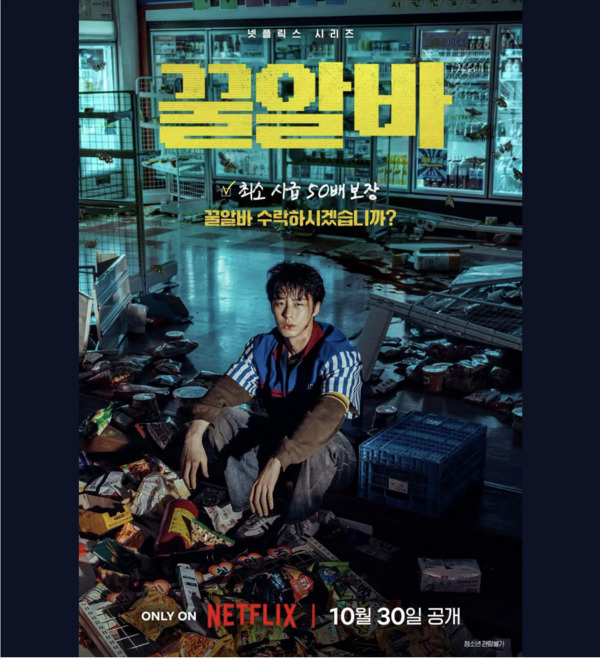
It crossed my mind that perhaps this was not a drama worth taking so seriously. But since it also has something in common with Doctor X, I feel compelled to address it at least once.
What filled the screen with bright red blood was a scene in which a monstrous clown suddenly appeared at a gathering of doctors from a university hospital and brutally slaughtered those assembled there.
Of course, I fully acknowledge that people may have different opinions about how to resolve the crisis involving essential medical services and the shortage of medical personnel in our society. During that prolonged conflict, some people may have found the responses or attitudes of medical professionals objectionable or disagreeable. Debating the direction of policy and criticizing the conduct of a professional group are entirely legitimate matters for public discussion in a democratic society.
But legitimate criticism and baseless curses are matters of an entirely different order.
This drama offers neither narrative necessity nor even the slightest reflection on the conflicts of the real world. Instead, it artificially creates characters who behave as though abusing their authority were perfectly natural, puts into their mouths the lines of third-rate villains that do not even exist in reality—such as "Inferior breeds should be legally prohibited from reproducing"—and then has a clown massacre them, selling the public a cheap sense of vicarious satisfaction.
Confronted with this grotesque violence, whose intended message I cannot even begin to understand, I feel a profound sense of dizziness as I wonder why this country harbors such a pathological and almost instinctive aversion to the medical profession.
As I stare blankly at such scenes, a bitter sense of self-mockery suddenly wells up inside me. I begin to wonder whether I have been living my life like a complete fool.
As a writer of novels and columns, I have tried to live in such a way that I would not be ashamed of even a single line I have written. But if I had decided, like these people, to pander to the world's vulgar envy and spew hypocrisy and sophistry, I probably could have made quite a lot of money with ease.
After all, few forms of intellectual junk food sell more easily in our age than narratives that cleverly provoke the inferiority complexes and anger lurking at the bottom of the public psyche, portray those who have achieved success through honest effort as greedy monsters, and then tear them to pieces.
But my memories and my sense of human decency will not allow me to join this despicable formula for commercial success.
I, too, would have long since departed this world if it had not been for the intervention of modern medicine during my adolescence.
Put your hand over your heart and think carefully.
How can medicine, which deals with human life itself, be treated as some kind of game that can be imitated through clumsy agitation or sheer luck?
These are people who sacrificed the entirety of their brilliant youth—the years when ordinary young people were dating on springtime streets, drinking together, and laughing with friends. Instead, they devoted their youth to windowless libraries, anatomy laboratories, and emergency-room duty stations where they stayed awake for three days and nights.
It was those lonely and fiercely demanding years, endured at the cost of all the pleasures of youth enjoyed by others, that saved me when I stood at death's door. And it is those same sacrifices that allow our families to breathe today.
If even a minimum of dignity and common sense remains in human society, then regardless of disagreements over policy or disappointments with the medical profession, it is only right that we preserve a measure of recognition and respect for those who devoted their precious youth to mastering the skills needed to save other people's lives.
Yet at some point, South Korea became gripped by a collective madness that portrays these lifesavers as potential criminals and demons deserving of death.
Lurking beneath this madness are a distorted egalitarianism and a crab mentality that cannot tolerate the painstaking efforts and achievements of others.
Unable even to imagine climbing the ladder of achievement built through ability and sweat, these people seek to drag those who have reached the top down as moral monsters, so that everyone can tumble together into the mud.
It is a rebellion driven by vulgar envy.
Incompetent politicians demonize doctors to evade responsibility for the medical system they themselves have ruined. Meanwhile, soulless creators fill their pockets by acting as cultural Red Guards, staging mass killings of doctors on screen in tune with that hatred.
How is this fundamentally different from the barbarism of China's Cultural Revolution, when Red Guards denounced doctors as bourgeois reactionaries, dragged them out of operating rooms, publicly humiliated them, and killed them?
The ultimate destination of a society that curses the medicine that saved my life, portrays those who sacrificed their youth to wield scalpels as monsters, and takes pleasure in watching them slaughtered is obvious.
The day the last remaining doctors finally put down their scalpels in hospitals where they are spat upon rather than respected, the price of that catastrophe will not be paid by the creators who wrote hypocritical scripts or the politicians who begged for votes.
It will be paid with our own lives, when we find ourselves knocking on the doors of emergency rooms in the early hours of the morning.
Confronted with a clown's massacre during what was supposed to be a rare moment of relaxation, I was left with one painfully clear realization.
The critically ill patient who urgently needs to be placed on the operating table is not the medical profession.
It is the diseased soul of our society—a society that endlessly curses the sweat and sacrifices of others while laughing at their destruction.
#Netflix #MedicalProfession #SouthKorea
* This article has been translated by ChatGPT.